
 0
0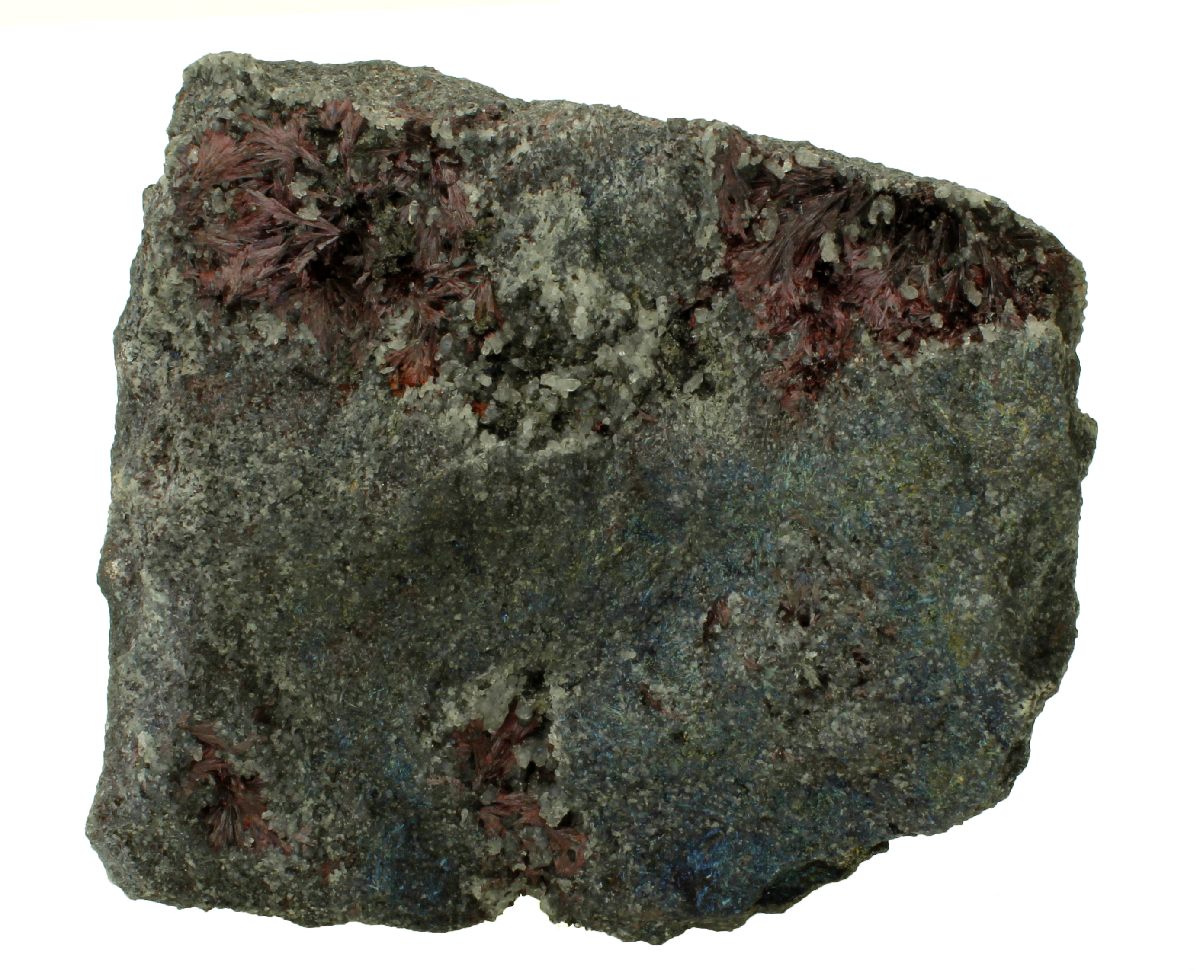
This cabinet-sized specimen is a European classic: Kermesite - antimony oxysulphide - from the Type Locality at Neue Hoffnung Gottes mine, Bräunsdorf, Freiberg District, Erzgebirge, Saxony, Germany. This occurrence was reported during the early 18th century, as red antimony (Antimonium rubrum, and Stibium rubrum) with the name Kermesite taking precedence during the 1830s. Larger crystals have subsequently been found in other localities across the world, but Type Localities hold a special place in the history of mineralogy. This specimen is not only from the Type Locality, but it large and rich too. The Kermesite forms in several sizable areas (over 2 cm wide) where shallow cavities occur within massive dense Berthierite/Stibnite. The Kermesite displays the classic radiating acicular form, as deep burgundy-red silky sprays in rich patches, with sprays reaching over 6 mm across. A fine example of a classic.
92 x 82 x 38 mm