
 0
0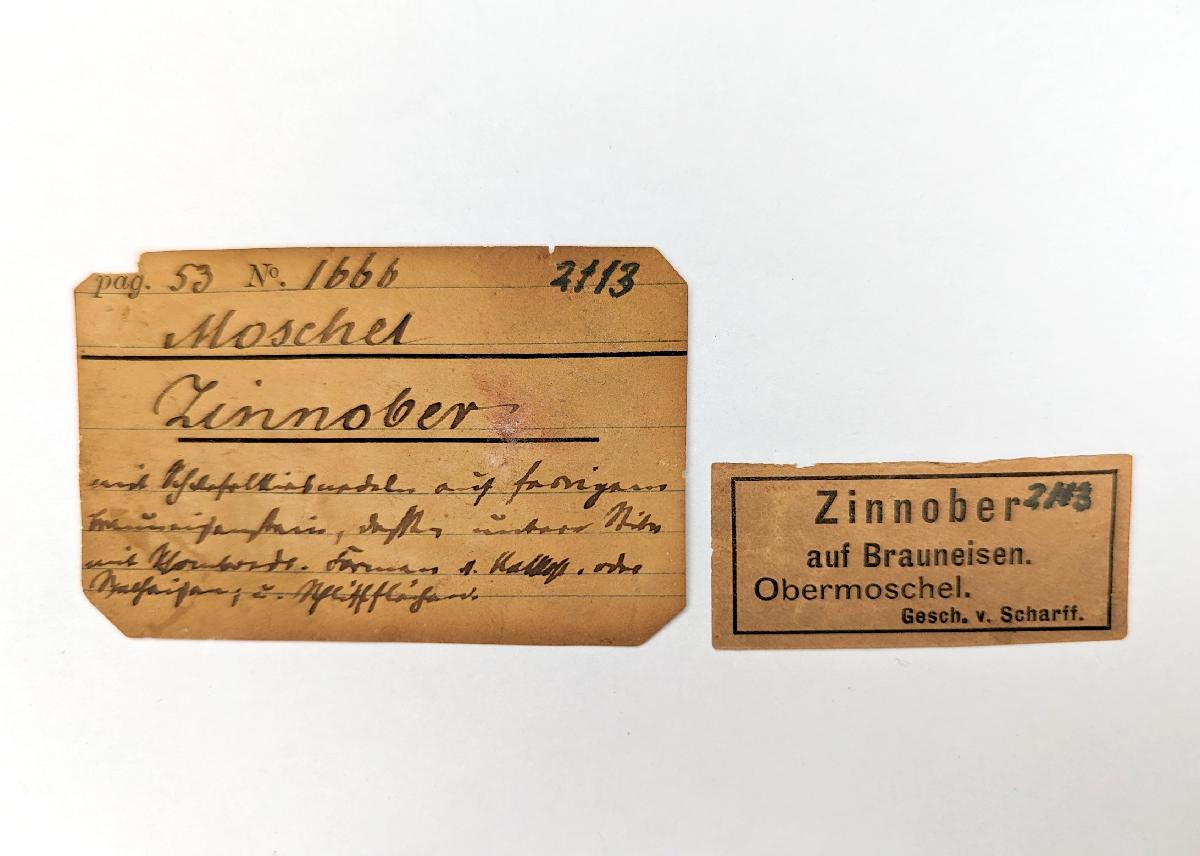
This beautiful, old-time small cabinet specimen of signal red Cinnabar is from the ancient mercury mining district of Landsberg in Rhineland-Palatinate, Germany, south-west of Frankfurt am Main. Moschellandsberg hill (now shortened to Landsberg), is within a region rich in mercury and mercury minerals, where mining began in around 1440. Because of mercury's unique property of being the only liquid metal at ambient conditions, it has been known since ancient times, and is thought to have been first discovered by the Ancient Egyptians prior to 1,500 BCE. Richly coating a matrix of what I suspect is Goethite, the Cinnabar at first glance looks like a powdery coating, but on close examination, particularly under a hand lens, it is micro-crystalline. This specimen is accompanied by old labels (see photo), the larger numbered 1666 with 2113 recorded as from a previous collection, the smaller label being No. 2113. Glued to the specimen are three paper labels bearing the numbers 2113, 1666 and 380, these being visible in the video. For any specimens containing mercury and or mercury bearing minerals, it is a sensible precaution to always wash your hands after handling.
94 x 38 x 48 mm