
 0
0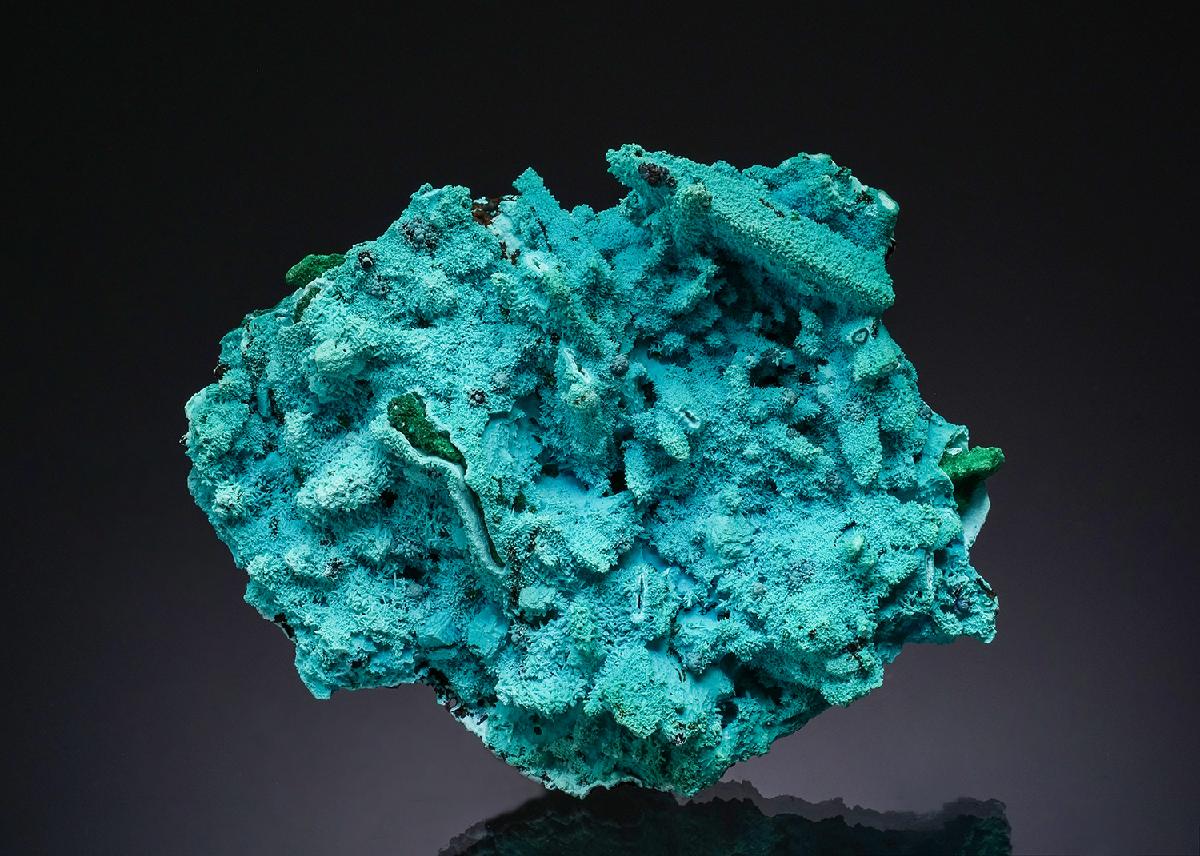
This unusual type of pseudomorph hit the market in about 2014 from Lupoto mine in Kipushi Territory, Haut-Katanga, DR Congo and immediately attracted attention because of their bright colour and complex geochemical history. Various suggestions have been put forward for how these formed, but the most convincing is that a bed of coarse bladed Azurite crystals were altered to and replaced by Malachite which in turn was coated and partially replaced by Chrysocolla as epimorphs. The Chrysocolla continued to grow as tiny acicular crystals coating the surface. On this cabinet-sized specimen the bladed Malachite pseudomorphs after Azurite reach 3.5 cm in length and are coated with turquoise coloured Chrysocolla. This material is subtly different to recent material from the Tenke-Fugurume area.
94 x 75 x 30 mm