
 0
0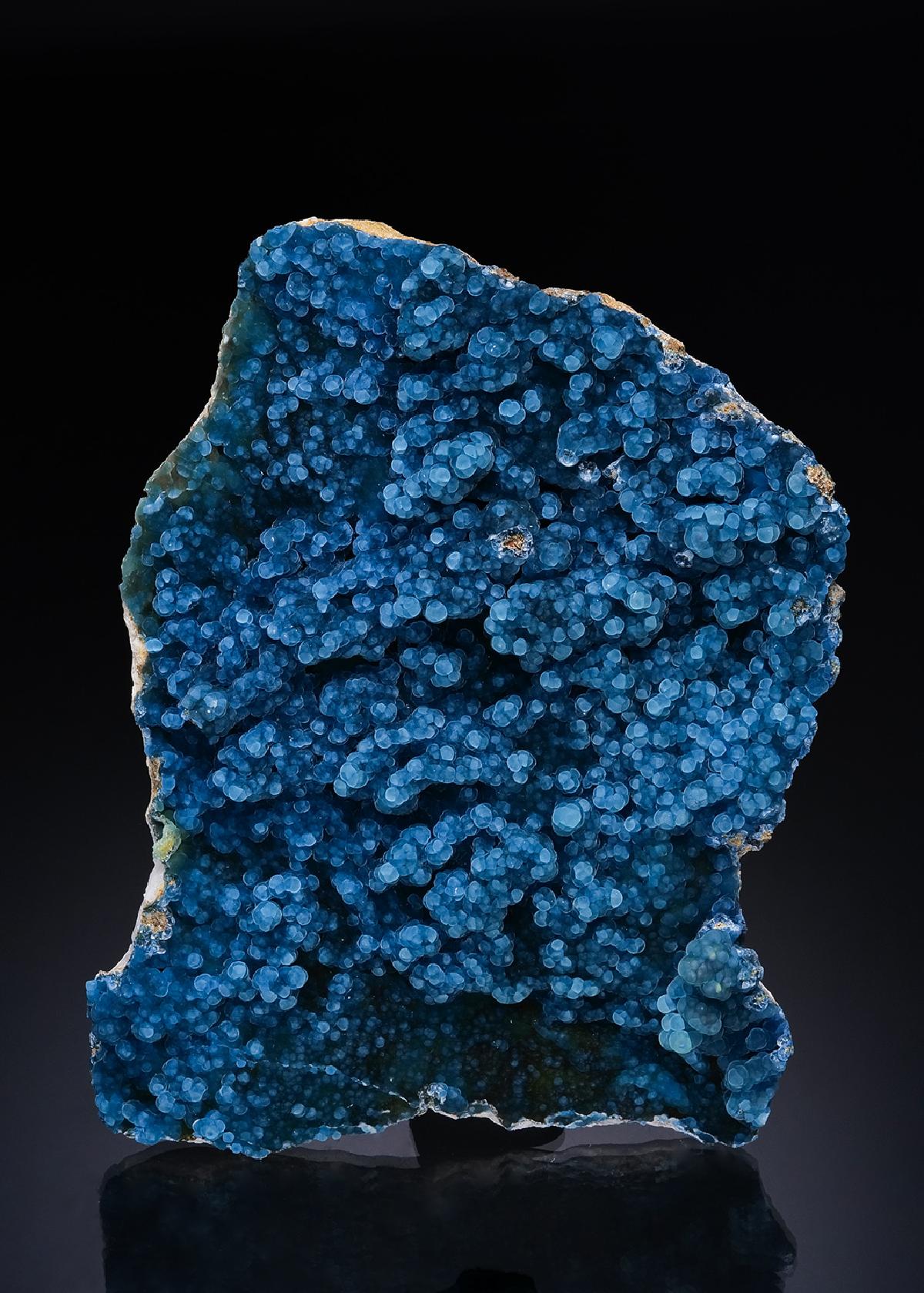
I am a big fan of secondary lead minerals and grew up lucky enough to be able to freely explore the Caldbeck Fells in Cumbria, northern England. Plumbogummite was the famed species from there, known in old museum collections and only the very best private collections, but the specimens were beautiful, and the world's best. Fast forward thirty years and what we knew of Plumbogummite has long since changed, with China providing the new dynamic. The discoveries made at Yangshuo mine (note that there is debate about if these actually came from the nearby Laohuan mine) from the early 2000s onwards completely changed our perception of Plumbogummite. The Caldbeck Fells specimens are completely different in appearance and have historical qualities, but the Chinese specimens are colourful, texturally wonderful, big, and dramatic. They come in several distinct forms, one of which are globular coatings either on Pyromorphite, or Quartz veinstone, like this superb large cabinet specimen. It seems somewhat appropriate to have this form when one considers the derivation of the species name: plumbo = lead; gum = globular, gum-like form. The colour here is a rich teal-blue, one of the more desirable shades from this discovery, and the botryoidal layer is a uniform 1.5 to 2 mm thick across the whole display surface. There is minimal damage, and in the few areas where the tips of botryoids have been split, it allows the internal form to be appreciated. This is certainly one of the larger and more displayable specimens of this distinctive globular form that I have seen available. Ex Nick Hawes collection.
177 x 130 x 40 mm